Technology has become the backbone of modern business. From customer communications and cloud applications to cybersecurity and data management, nearly every critical business function depends on reliable IT systems.
Yet many organizations continue to struggle with downtime, security threats, rising IT costs, and limited internal resources. This is one of the main reasons businesses are increasingly turning to Managed IT Services Providers (MSPs).
However, not all managed IT services are created equal.
Some providers simply react when something breaks. Others act as strategic technology partners that proactively monitor systems, improve security, optimize performance, and support long-term business growth.
If you’re evaluating managed IT services for your organization, it’s important to know exactly what you should expect.
This checklist will help you understand the core services, capabilities, and standards every managed IT services provider should deliver.
What Are Managed IT Services?
Managed IT services involve outsourcing the management, monitoring, maintenance, and support of your technology infrastructure to a specialized provider.
Instead of relying solely on internal IT staff or responding to problems after they occur, managed IT services focus on proactive management and continuous improvement.
Typical areas include:
- Network management
- Cybersecurity
- Cloud services
- Data backup and recovery
- End-user support
- Infrastructure monitoring
- Compliance management
The goal is simple: ensure technology supports business growth rather than becoming a source of risk or disruption.
Why the Bar for Managed IT Has Fundamentally Changed
Ten years ago, many businesses could get by with a break-fix IT model and a basic antivirus subscription. If something broke, you called someone who came and fixed it. The expectation was simple: keep the computers running.
Businesses no longer want basic troubleshooting or reactive support. They want a partner that understands operations, anticipates risk, and helps technology support growth.
The reasons for this shift are straightforward. Remote and hybrid work is permanent. Cloud applications keep multiplying. Ransomware attacks have made cybersecurity a board-level concern. Compliance requirements in healthcare, finance, and legal continue to tighten. And the average cost of a data breach for SMBs now sits between $2.9 and $3.5 million — a number that makes proactive IT investment look inexpensive by comparison.
Managed IT services are moving beyond basic infrastructure support to encompass automation and cybersecurity — with industry-specific services and optimized cloud architecture.
Most MSP relationships fail quietly. Businesses endure slow response times, recurring issues that never get resolved, security gaps that nobody mentions until they become incidents, and a complete absence of strategic guidance. These frustrations drive the search for a better standard — and this checklist defines what that standard should be.
Whether you are evaluating your first MSP, reassessing an existing relationship, or benchmarking your current provider against 2026 expectations, this guide gives you the complete checklist and the context to use it.
Why Businesses Are Investing in Managed IT Services
Technology environments have become significantly more complex.
Businesses must manage:
- Hybrid workforces
- Cloud platforms
- Cybersecurity threats
- Regulatory requirements
- Software integrations
- Increasing customer expectations
Maintaining these systems internally can be expensive and resource-intensive.
Managed IT services help businesses:
- Reduce downtime
- Improve security
- Control IT costs
- Access specialized expertise
- Scale more efficiently
But these benefits only happen when the provider delivers the right services.
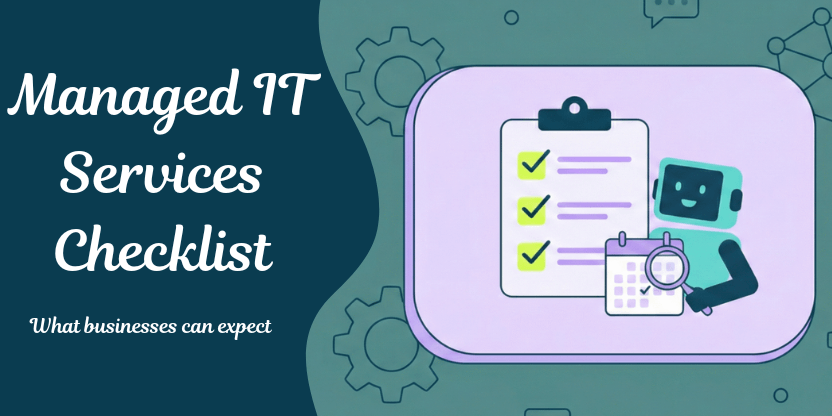
The Complete Managed IT Services Checklist
24/7 System Monitoring
One of the most important capabilities of any managed IT provider is continuous monitoring.
Problems rarely occur during business hours.
Servers fail overnight. Security threats emerge on weekends. Network issues can impact employees at any time.
A quality provider should offer:
- Real-time infrastructure monitoring
- Network performance monitoring
- Server health monitoring
- Application monitoring
- Automated alerting
The goal is to identify issues before they impact users.
Why It Matters
Proactive monitoring helps prevent downtime, improves performance, and reduces costly disruptions.
Cybersecurity Protection
Cybersecurity should be a core component of every managed IT service offering.
Businesses face increasing threats from:
- Ransomware
- Phishing attacks
- Data breaches
- Insider threats
- Malware
A managed IT provider should deliver comprehensive security services rather than basic antivirus software.
Expect capabilities such as:
- Endpoint protection
- Firewall management
- Threat detection
- Vulnerability assessments
- Security monitoring
- Incident response planning
Why It Matters
The financial and reputational impact of a cyberattack can be devastating. Strong security controls significantly reduce risk.
Help Desk and User Support
Employees rely on technology to do their jobs.
When issues arise, they need fast support.
Every managed IT services provider should offer a responsive help desk with clear service-level agreements (SLAs).
Support should include:
- Remote troubleshooting
- Software support
- Hardware support
- User account assistance
- Password management
- Device configuration
Why It Matters
Quick issue resolution minimizes productivity losses and improves employee satisfaction.
Cloud Management and Support
Cloud computing has become central to business operations.
Whether your organization uses AWS, Microsoft Azure, Google Cloud, or SaaS platforms, cloud management should be part of your managed IT strategy.
Key services should include:
- Cloud monitoring
- Resource optimization
- Cloud security
- Cost management
- Backup management
- Cloud performance monitoring
Why It Matters
Cloud environments require ongoing management to ensure security, efficiency, and cost control.
Data Backup and Disaster Recovery
Every business should assume that disruption will happen at some point.
Whether caused by cyberattacks, hardware failures, natural disasters, or human error, the ability to recover quickly is essential.
Your provider should offer:
- Automated backups
- Secure data storage
- Recovery testing
- Disaster recovery planning
- Business continuity support
Why It Matters
Data loss can cripple operations. A strong recovery strategy minimizes downtime and protects critical business information.
Network Management
Your network is the foundation of business connectivity.
Managed IT providers should actively manage:
- Routers
- Switches
- Wireless networks
- VPNs
- Network security controls
Regular monitoring and optimization help ensure reliable performance.
Why It Matters
Poor network performance directly impacts productivity, collaboration, and customer experience.
Patch Management and System Updates
Many security incidents occur because systems remain unpatched.
A managed IT provider should automate and manage updates across:
- Operating systems
- Applications
- Security tools
- Servers
- End-user devices
- Why It Matters
Timely updates reduce vulnerabilities and improve overall system stability.
Compliance and Risk Management
Organizations in healthcare, finance, education, and other regulated industries face strict compliance requirements.
A managed IT provider should understand frameworks such as:
- HIPAA
- GDPR
- SOC 2
- PCI DSS
Support should include:
- Security assessments
- Audit preparation
- Compliance monitoring
- Documentation management
Why It Matters
Compliance failures can lead to fines, legal issues, and loss of customer trust.
IT Asset Management
Many organizations lose visibility into their technology assets as they grow.
Managed IT providers should maintain accurate records of:
- Hardware
- Software licenses
- Devices
- Cloud resources
Why It Matters
Proper asset management improves budgeting, security, and lifecycle planning.
Strategic IT Planning
The best managed IT providers do more than support technology.
They help align technology investments with business goals.
Expect services such as:
- Technology roadmaps
- Infrastructure planning
- Budget recommendations
- Digital transformation guidance
- IT consulting
Why It Matters
Technology should support growth, not simply maintain operations.
Performance Reporting and Transparency
A quality managed IT provider should provide regular reporting.
Reports should cover:
- System performance
- Security events
- Ticket resolution metrics
- Uptime statistics
- Resource utilization
Why It Matters
Transparency helps business leaders make informed decisions and measure value.
Scalability and Future Readiness
Your technology needs will evolve.
A managed IT provider should be capable of supporting:
Scalability and Future Readiness
Your technology needs will evolve.
A managed IT provider should be capable of supporting:
- Business growth
- New locations
- Cloud expansion
- Additional users
- Emerging technologies
Why It Matters
Scalable IT support prevents future bottlenecks and enables long-term success.
Red Flags to Watch For
While evaluating providers, watch for warning signs such as:
- Reactive-only support
- Lack of cybersecurity expertise
- No defined SLAs
- Limited reporting
- Poor communication
- No strategic guidance
- Hidden fees
These issues often indicate a provider focused on maintenance rather than business outcomes.
How to Evaluate Your Current MSP Against This Checklist
Step 1: Request a Service Scope Review
Ask your current MSP to document exactly what is and is not in scope. Many MSP relationships suffer from scope ambiguity — the business assumes certain services are included; the MSP considers them out of scope. The checklist above creates the basis for a clear scope conversation.
Step 2: Pull Three Months of Performance Data
Request three months of reporting against the metrics in Section 8. If your MSP cannot produce this data, that is itself a finding. Review uptime, response times, patch compliance, backup success rates, and SLA compliance.
Step 3: Test the Help Desk
Submit tickets at different times of day and week, including after hours. Measure actual response times against documented SLAs. Ask your users privately whether they find the help desk effective — if users avoid contacting IT, that is a red flag.
Step 4: Ask the Security Questions
Request a copy of your current vulnerability assessment, your incident response plan, and your last backup restore test results. An MSP that cannot produce all three is carrying security risk on your behalf without the evidence to manage it.
Step 5: Evaluate the Strategic Relationship
Is your MSP proactively surfacing technology recommendations, or only responding to your requests? Do you have a named advisor who understands your business goals? Has your MSP ever suggested something before you needed it rather than after?
Questions to Ask a Managed IT Services Provider
Before signing a contract, ask:
- What is included in your service agreement?
- How quickly do you respond to critical issues?
- What cybersecurity services are included?
- How do you handle backups and disaster recovery?
- What reporting will we receive?
- How do you support cloud environments?
- How do you help clients plan for future growth?
The answers will reveal whether the provider is truly proactive.
Final Thoughts
Managed IT services are no longer just about fixing technology problems.
Today’s businesses need partners who can proactively manage infrastructure, strengthen cybersecurity, support cloud environments, improve operational efficiency, and align technology with business objectives.
When evaluating providers, use this checklist as a benchmark.
A strong managed IT services provider should deliver:
- 24/7 monitoring
- Cybersecurity protection
- Help desk support
- Cloud management
- Backup and disaster recovery
- Compliance support
- Strategic IT planning
- Performance reporting
- Scalability for future growth
The right provider doesn’t simply keep systems running. They help your business operate more securely, efficiently, and competitively in an increasingly digital world.